
The simple answer
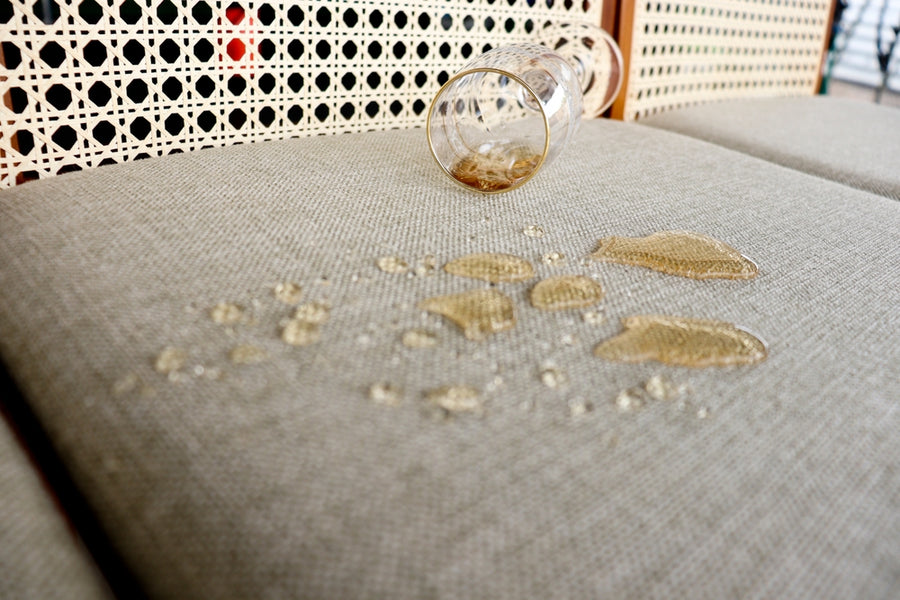
Nanocoating changes how a compatible furniture surface interacts with liquid. Instead of spreading and soaking in immediately, a spill may pull into droplets or move more slowly, giving you extra time to blot it away.
A tipped coffee cup can become a race against the fabric. On untreated upholstery, liquid can travel across the weave, move deeper into the cushion and carry colour with it. A professionally applied coating is designed to slow that journey. It is not magic and it does not make a sofa invincible but it can turn a split second accident into a manageable cleanup.
What happens during a spill?
| Moment | Untreated upholstery | Compatible nanocoated upholstery | Your best move |
|---|---|---|---|
| Impact | Liquid begins wetting the fibres | Liquid may bead or spread more slowly | Grab a clean absorbent cloth |
| First seconds | The wet area can expand | More liquid may remain near the surface | Blot gently never scrub |
| If ignored | Liquid can move into padding | Protection may eventually be overwhelmed | Act promptly even when you see beading |
The science, without the textbook
Every surface has a level of attraction to liquids. When that attraction is strong, a droplet flattens and spreads. A suitable nanocoating reduces the interaction between the outer surface and certain liquids. The droplet can hold a rounder shape, reducing its immediate contact with the fibres.
This effect is often called hydrophobicity for water based liquids. Some formulations also provide resistance to oils, but water resistance and oil resistance are not automatically the same. Product choice must match the material and the risks found in the home.
Remember: “resistant” is not the same as “proof.” Contact time, heat, dye strength, oil content and the condition of the coating all affect the result.
Different spills behave differently
| Spill | Main concern | Immediate response |
|---|---|---|
| Water or clear drink | Fast absorption and water marking | Blot with a clean white cloth |
| Coffee, tea or juice | Colour, sugar and acidity | Lift the liquid promptly; do not rub colour outward |
| Oil or sauce | Oil may interact differently from water | Remove solids carefully and seek approved guidance |
| Ink, cosmetics or strong dye | Rapid pigment transfer | Do not experiment; contact a professional quickly |
| Hot liquid | Heat plus moisture may damage fibres or finish | Act safely and arrange assessment if needed |
Why preparation changes the result
A coating can only reach and interact with the surface it is meant to protect. Dust, body oils, detergent residues and older protectors can block even coverage. That is why the sequence matters:
- Identify the material. Fibre content, backing, dyes and finishes all influence compatibility.
- Inspect the condition. Existing stains, wear and residues should be addressed first.
- Patch test. A hidden area helps confirm appearance and response.
- Apply evenly. Seams, edges and high contact areas require consistent attention.
- Allow full curing. Using or cleaning the item too early may interfere with performance.
Your 5 step spill rescue plan
Fast, gentle action beats aggressive cleaning.
Use a spoon or blunt edge without pushing material deeper.
Use a clean white absorbent cloth from the outside inward.
Do not mix cleaners or use bleach, steam or harsh solvents.
For unusual or coloured spills, contact a professional.
Do this not that
| Do | Avoid |
|---|---|
| Blot with a clean, absorbent white cloth | Scrubbing back and forth |
| Follow the supplied aftercare instructions | Using a random internet cleaning mixture |
| Report strong dyes, oils or chemicals quickly | Waiting because the surface initially beaded |
| Use furniture normally after full curing | Sitting, covering or cleaning during curing |
What affects long term performance?
- The fibre or surface composition and its condition
- The product selected for that specific material
- Coverage, application technique and curing time
- Daily friction from sitting, children, pets and moving cushions
- How often the item is deep cleaned and which chemicals are used
- Whether spills are removed promptly
High contact zones such as seat fronts, armrests and dining chair edges experience more abrasion. Those areas may age differently from decorative sections that are rarely touched.
Frequently asked questions
Does beading prove the entire sofa is protected?
Beading is a useful visible signal, but performance can vary by material, location and wear. Even application and professional inspection are more important than a single demonstration spot.
Can nanocoating stop old stains from returning?
No. Existing contamination must be assessed and cleaned before treatment. A coating is protective; it is not a stain removal process.
Will steam cleaning remove the protection?
Heat, chemicals and extraction can affect some coatings. Follow the service specific aftercare guidance and tell future cleaners that the item has been treated.
What if the spill disappears into a seam?
Seams, piping and zips can behave differently from flat fabric. Blot carefully and contact a professional if liquid has reached internal padding.
Keep exploring
- Start with the complete nanocoating guide
- Understand the science behind liquid beading
- See Aqua Protection's application process
Turn “Oh no!” into “I’ve got this.”
Share photos of your sofa, dining chairs, headboard or other upholstered furniture for a suitability assessment and personalised recommendation.